


Dynojet UTV Charge Tube
PT07000467 (MFG #: 96030002)
$613.99
Sale price
$613.99
Regular price
$613.99
Skip to product information


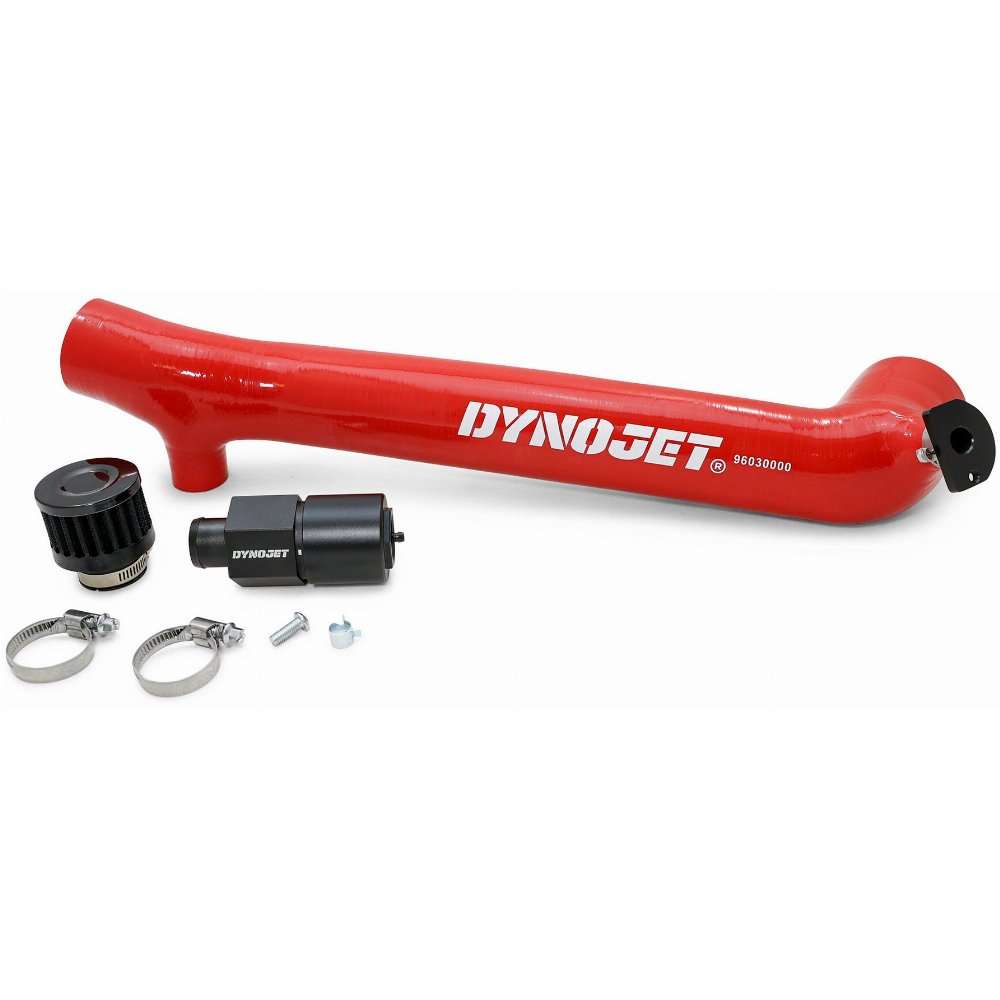


Dynojet UTV Charge Tube for Polaris RZR XP Turbo S Side-by-Side


Dynojet UTV Charge Tube for Polaris RZR XP Turbo S Side-by-Side
$613.99
Sale price
$613.99
Regular price
$613.99
SKU:PT07000467
My Garage
Select a ride to guarantee fitment.
My Garage
Add your vehicles to your garage. Several features will then be available to facilitate your searches.
- Store vehicles in your garage
- Easily find guaranteed fit products and accessories
- Get product recommendations
Available Online
Free shipping on orders over $99
Standard Fulfillment: -
Expedited Fulfillment: -

Lowest Price Guaranteed

Fast Shipping

Easy Returns
Description
A quick to install upgrade with a huge payoff, Dynojet's silicone charge tubes are made for turbocharged UTVs to improve your turbo's durability. This kit (which includes an adjustable blow-off valve) allows you to turn up the boost and offers a major upgrade over stock. Fits 2020 Can-Am Maverick X3 Turbo RR models.
The Dynojet Charge Tube is a high-performance upgrade for the 2020 Can-Am Maverick X3 Turbo RR.
Designed to outlive your Maverick X3 Turbo RR, its 4-layer reinforced silicone walls can handle the elevated pressures and temperatures that are present in stock or modified trim. When it’s time to relieve the pressure as the throttle closes the included blow-off-valve can be configured to recirculate the air back into the stock plenum or vent it to atmosphere through the included air filter. A provision to re-use the original TMAP sensor is incorporated and constructed of heat-resistant polymer to avoid conductive heat soak into the sensor.
Technical Specifications
- MFG. Part Number 96030002
Vehicle Information
Polaris RZR XP Turbo S Side-by-Side (2018-2021)
The Polaris RZR XP Turbo S, produced from 2018 to 2021, is a high-performance side-by-side known for its powerful 925cc ProStar Turbo H.O. engine, consistently delivering 168 HP across all model years. This 4-stroke DOHC twin-cylinder turbocharged vehicle was positioned as a top-tier off-road machine, offering both two-seat (XP Turbo S) and four-seat (XP 4 Turbo S) configurations. While the core engine remained unchanged, the RZR XP Turbo S received several significant mid-cycle updates. In 2019, Polaris introduced a new frame, upgraded bodywork, and revised cockpit ergonomics, alongside increased suspension travel with redesigned Fox Live Valve shocks. The "Velocity" trims were also introduced in 2019, featuring an alternative suspension setup with Walker Evans 3.0 Velocity Series Shocks, enhanced power steering, and recalibrated throttle mapping. Clutch system updates occurred in 2019 (snap ring delete) and 2021 (P90X clutch system adoption). Additionally, O2 sensor and intercooler updates were implemented in 2019, 2020, and 2021, progressively standardizing wideband O2 sensors across the lineup. These changes aimed to refine performance and address known issues, making each model year distinct in its features and capabilities. FAQ:
Q: Will this part fit my RZR XP Turbo S?
A: To ensure perfect compatibility, please use our year and edition selector at the top of the page.
Maintenance
| Component | Interval | Details |
| Engine Oil & Oil Filter | Break-in: 25 h or 800 km or 1 month. Routine service: 50 h or 6 months or 800 km. | Always change the filter whenever changing the oil. |
| Drive Belt | Inspection: 50 h or 6 months or 800 km. | Replace if signs of wear (fraying, "hour-glassing", loose cords, missing cogs, abrasions, burns, other damage). Lifespan depends on driving style. |
| Spark Plugs | Replacement: 500 h or 8000 km or 12 months. | Inspect every 100 h. |
| Air Filter | Inspection & Cleaning: Before every ride or at least weekly. Replacement: As needed, or every 100-200 h, 1600-3200 km, or 12 months. | More frequent in dusty or extreme conditions. |
| Coolant | Replacement: Every 5 years. | Check level before every ride. Inspect for leaks and test strength seasonally. Replace with Polaris Antifreeze 50/50 Premix if system has been drained. |
| Severe Use Conditions | More frequent servicing | Vehicles subjected to severe use require more frequent servicing, typically at 50% of the stated intervals. Severe use includes frequent immersion in mud, water, or sand, constant high RPM use, prolonged low-speed heavy load operation, extended idling, and short-trip cold weather operation. |