


Gates G-Force Redline Drive Belt
1030-8570 (MFG #: 28R3856)
$264.99
Sale price
$264.99
Regular price
$277.99
Sale
-4%
Skip to product information

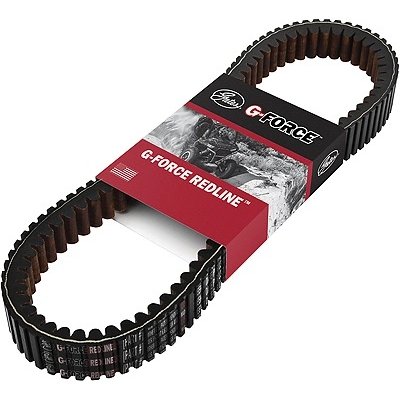


Gates G-Force Redline Drive Belt for Ski-Doo MXZ 1200 Snowmobile

Gates G-Force Redline Drive Belt for Ski-Doo MXZ 1200 Snowmobile
$264.99
Sale price
$264.99
Regular price
$277.99
Sale
-4%
SKU:1030-8570
My Garage
Select a ride to guarantee fitment.
My Garage
Add your vehicles to your garage. Several features will then be available to facilitate your searches.
- Store vehicles in your garage
- Easily find guaranteed fit products and accessories
- Get product recommendations
Available Online
Free shipping on orders over $99
Standard Fulfillment: -
Expedited Fulfillment: -

Lowest Price Guaranteed

Fast Shipping

Easy Returns
Description
Fitment
- Can-Am Ryker 600 (19-20)
- Can-Am Ryker 900 (19-20)
Designed for the most demanding, turbo-charged off-road CVT applications. With Gates proprietary materials and design, G-Force RedLine CVT belts handle extreme temperatures with excellent heat recovery, while maximizing load and torque capacity making it one of the most efficient CVT belts currently on the market.
Why G-Force RedLine CVT Belts?
- Greater heat resistance and recovery, even under severe duty cycles.
- Optimized, patented EE compound maximizes axial stiffness enabling belts to run at higher continuous torques or loads.
- Innovative design results in better acceleration, higher top speeds, less speed ratio and energy loss in extreme off-road environments.
- Improved durability, crack and wear-resistance means a longer-lasting, high-performance power transmission belt for the most demanding applications.
- Reduced environmental risk made without harmful chlorinated compounds.
Features
- First on the market to utilize Ethylene Elastomer compound to address the needs of larger SxS and high-horsepower ORVs in tough riding conditions.
- Next-generation EE compound offers maximum transverse stiffness and heat resistance, resulting in higher load capacity, higher peak torque capacity, less "heat fade" and less speed loss.
- Delivers 75% greater dynamic axial stiffness on average, up to 50% lower speed losses and better recovery from temperatures up to +170°C (+338°F) without power loss.
- Unmatched Temperature Capability - Runs cooler, resists glazing for better recovery and reduced cracking/chunking out after running at temps exceeding +149°C (+300°F).
- Extended Belt Life - Belt life increased 100-300% versus aftermarket competitive belts in severe duty lab test conditions and in field testing.
- Higher Power Capacity - Reduced speed (rpm) loss by 50% under high loads and increased load capacity by >10% compared to other aftermarket belt.
Technical Specifications
- MFG. Part Number 28R3856
Vehicle Information
Ski-Doo MXZ 1200 Snowmobile (2009-2018)
The Ski-Doo MXZ 1200, powered by the Rotax 4-TEC engine, was a key model in Ski-Doo's lineup from 2009 to 2018. Known for its consistent 1170.7 cc (130 hp) 4-stroke, 3-cylinder engine, this snowmobile evolved across different chassis platforms. Initially introduced in 2009 on the REV-XR chassis, designed to accommodate its larger engine, the MXZ 1200 saw a significant update in 2016. For the 2016 model year, it transitioned to the more compact REV-XS chassis and gained the Intelligent Throttle Control (iTC) system, offering Sport, Standard, and ECO driving modes for enhanced performance and efficiency. The 2017 MXZ TNT models also received the rMotion 129 rear suspension as standard. FAQ:
Q: How do I know which parts fit my Ski-Doo MXZ 1200?
A: To ensure perfect compatibility, please use the year and edition selector at the top of this page.
Maintenance
| Component | Interval | Details |
| Engine Oil and Oil Filter | Every 25 hours (initial), then every 100 hours or annually | The initial oil and filter change is recommended after 25 hours of operation. Subsequently, maintenance should be performed every 100 hours of operation or once per year, whichever comes first. |
| Drive Belt | Inspect every 50 hours or as needed | Inspect the belt every 50 hours or if a change in performance is noticed. Replace if signs of wear (cracking, uneven wear, flat spots, fraying) are present. It is often recommended to start each season with a new belt. |
| Spark Plugs | Every 10,000 km or every 3 years | It is generally recommended to replace spark plugs before the start of each season. For more aggressive use, more frequent replacement may be necessary. |
| Coolant | Every 2 years |
Maintenance intervals may vary slightly by model year. Always consult your snowmobile's official owner's manual for precise information.