


K&N High Flow Air Filter
1019-0818 (MFG #: DU-9001)
$145.99
Sale price
$145.99
Regular price
$145.99
Skip to product information
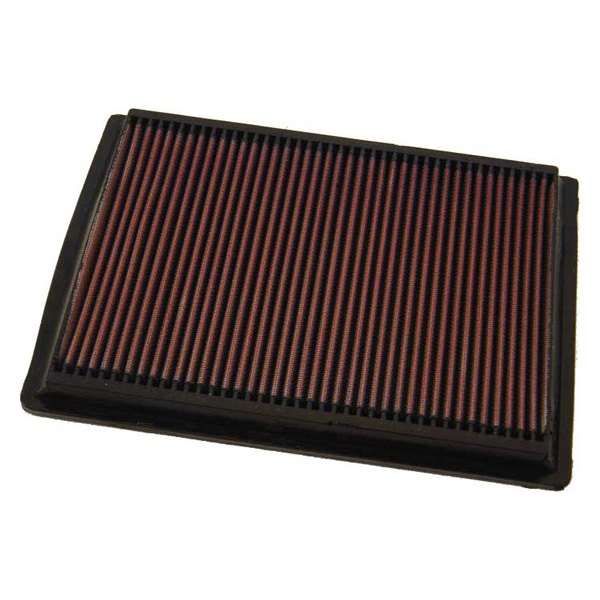


K&N High Flow Air Filter for Kawasaki Ninja 500 Motorcycle - Street
K&N
K&N High Flow Air Filter for Kawasaki Ninja 500 Motorcycle - Street
K&N
$145.99
Sale price
$145.99
Regular price
$145.99
SKU:1019-0818
My Garage
Select a ride to guarantee fitment.
My Garage
Add your vehicles to your garage. Several features will then be available to facilitate your searches.
- Store vehicles in your garage
- Easily find guaranteed fit products and accessories
- Get product recommendations
Available Online
Free shipping on orders over $99
Standard Fulfillment: -
Expedited Fulfillment: -

Lowest Price Guaranteed

Fast Shipping

Easy Returns
Description
K&N Powersports High-Flow Air Filter
Upgrade your machine’s performance with a K&N High-Flow Powersports Air Filter. Designed to increase airflow while providing superior filtration, these premium reusable filters help your engine breathe better for improved horsepower, throttle response, and overall performance.
Built with oiled cotton gauze media, K&N filters capture dirt and debris while allowing more air to reach the engine compared to traditional paper filters. The result is better performance and long-term reliability for motorcycles, ATVs, UTVs, and other powersports machines.
Unlike disposable filters, K&N air filters are washable and reusable, helping reduce maintenance costs over time. With proper cleaning and oiling, one filter can last for the life of your vehicle.
Key Features
High-flow design improves airflow and engine performance
Superior filtration protects your engine from dirt and debris
Washable and reusable for long-term value
Durable oiled cotton gauze construction
Direct OEM replacement for easy installation
Designed specifically for motorcycles, ATVs, UTVs, and other powersports applications
Why Choose K&N?
K&N is a global leader in high-performance filtration, trusted by riders and racers worldwide. Their powersports air filters are engineered to deliver maximum airflow without sacrificing engine protection, helping you get the most out of your ride.
Technical Specifications
- MFG. Part Number DU-9001
Vehicle Information
Kawasaki Ninja 500 Motorcycle - Street (1987-2026)
The Kawasaki Ninja 500, also known as EX500 or GPZ500S, has been a popular sportbike from 1987 to 2026, recognized for its accessible performance and versatility. Its evolution is marked by two distinct engine generations. The first, from 1987 to 2009, featured a 498cc parallel-twin engine. This generation underwent a significant redesign in 1994, introducing 17-inch wheels, a rear disc brake, and updated aesthetics, leading to its rebranding as the Ninja 500R. The second generation, launched in 2024, brought a new 451cc parallel-twin engine, derived from the Ninja 400, along with modern styling, LED lighting, and a new digital dashboard. This new engine also features fuel injection, a departure from the carbureted system of earlier models. Throughout its production, the Ninja 500 has been available under various names and trims, including EX500, GPZ500S, Ninja 500R, and for the latest generation, Ninja 500, Ninja 500 ABS, and special editions like the Ninja 500 SE ABS and KRT Edition. Q: How can I ensure parts fit my Kawasaki Ninja 500?
A: Use the year and edition selector at the top of the page to find parts specific to your model.
Maintenance
| Component | Interval | Details |
| Engine Oil and Oil Filter | Varies by generation | 1987-2009: Change every 12 000 km. The oil filter should be replaced at the same time. 2024-2026: Change every 11 000 km. Some suggest more frequent changes, approximately every 6 500-7 000 km. The oil filter should be replaced with each oil change. |
| Spark Plugs | Varies by generation | 1987-2009: Check every 6 000 km. Clean and gap every 5 000 km. |
| Air Filter | Varies by generation | 1987-2009: Check the operation of the air suction valves every 5 000 km. |
| Coolant | Every 3 years | Applicable to both generations. |
| Drive Chain | Varies by action | 1987-2009: Check and adjust slack every 800 km. Clean and lubricate every 1 000 km. 2024-2026: Clean and lubricate every 1 000 km. Check slack regularly. |
| First Service (Break-in) | 1 000 km | For the 2024-2026 generation (after the break-in period). |
It is crucial to always refer to the official owner's manual for your specific model year for the most accurate and detailed maintenance information.