


Kimpex Standard Metal Brake Pads
PT3000193 (MFG #: 05-152-35FM)
$23.39
Sale price
$23.39
Regular price
$23.39
Skip to product information


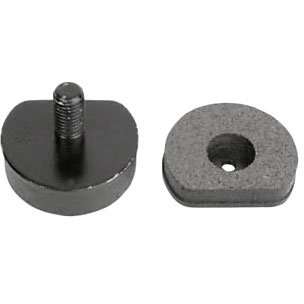


Kimpex Standard Metal Brake Pads for Polaris Indy 340 Snowmobile


Kimpex Standard Metal Brake Pads for Polaris Indy 340 Snowmobile
$23.39
Sale price
$23.39
Regular price
$23.39
SKU:PT3000193
My Garage
Select a ride to guarantee fitment.
My Garage
Add your vehicles to your garage. Several features will then be available to facilitate your searches.
- Store vehicles in your garage
- Easily find guaranteed fit products and accessories
- Get product recommendations
Available Online
Free shipping on orders over $99
Standard Fulfillment: -
Expedited Fulfillment: -

Lowest Price Guaranteed

Fast Shipping

Easy Returns
Description
Pad Purpose:
- The purpose of any brake pad is to push or squeeze against the brake drum or disc to slow it down. Softer brake pads "bite" into the rotor and stop better but tend to wear out faster.
Stopping Power:
- The stopping power of ceramic and metallic pads varies by temperature. Ceramic pads tend to stop better when very hot and metallic operate better in the cooler range.
Fade Resistance:
- A ceramic pad's strongest point is its ability to resist "brake fade", or the tendency to lose performance during repeated use and subsequent heating.
Wear:
- Though both pads tend to wear at similar rates, the ceramic's softer material surface helps prevent damage to metal rotors.
Noise and Dust:
- Ceramic pads vibrate at a higher frequency than the human ear can detect, and thus appear quieter in operation than metallic. Also, ceramic pads don't cause the black "brake dust" deposits like metallic pads.
Technical Specifications
- MFG. Part Number 05-152-35FM
Vehicle Information
Polaris Indy 340 Snowmobile (1999-2007)
The Polaris Indy 340, produced between 1999 and 2007, was a popular snowmobile model known for its reliability and simplicity. It consistently featured a 339cc fan-cooled twin-cylinder engine, generally rated at approximately 36 horsepower. This 2-stroke, reed valve, carbureted engine remained a defining characteristic throughout its production, ensuring predictable performance for trail enthusiasts. While the 339cc engine remained largely consistent, the chassis underwent a notable evolution. Earlier models utilized the traditional “Indy” chassis, while later models, starting in 2004 and becoming predominant by 2006, transitioned to the more rugged “EDGE” chassis. The “LX” trims that appeared in 2007 were also part of the EDGE chassis lineup, succeeding the “Classic” versions. FAQ:
Q: How can I ensure part compatibility for my Polaris Indy 340?
A: To guarantee part compatibility, please use our year and trim selector located at the top of this page. It will help you find the exact components for your specific model.
Maintenance
| Component | Interval | Details |
| Engine Oil and Filter | 800 km or 6 months, or 1 600 km or 1 year following initial break-in | Check level before every ride. Some manuals suggest changing every 3 200 km or 200 hours. |
| Drive Belt | 800 km or 6 months | Inspect and adjust. Replace as needed. Inspection and replacement suggested at 50 hours or 800 km. |
| Spark Plug | 3 200 km or 2 years | Inspect and replace as needed. Some schedules indicate annual inspection and replacement or at 1 600 km. |
| Air Filter | Before every ride (cleaning and inspection) | Clean and inspect, replace as needed. Replacement suggested at 50 hours / 1 600 km / 1 year following initial break-in. |
| Coolant | Check level before every ride. Test strength and inspect for leaks every 800 km or 6 months. Flush system every 8 000 km or 5 years. | Daily level check recommended. Seasonally inspect coolant strength and yearly pressure test the system. Some manuals recommend changing every two years. |
Service intervals may vary slightly by model year and specific vehicle configuration. It is crucial to consult the owner's manual for your exact model for the most accurate maintenance schedule.