


Kimpex Standard Metal Brake Pads
PT3000193 (MFG #: 05-152-35FM)
$23.39
Sale price
$23.39
Regular price
$23.39
Skip to product information


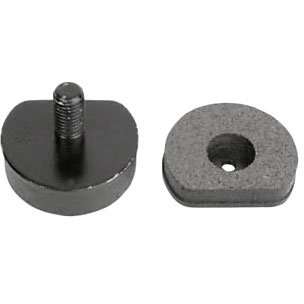


Kimpex Standard Metal Brake Pads for Polaris Indy XLT 600 Snowmobile


Kimpex Standard Metal Brake Pads for Polaris Indy XLT 600 Snowmobile
$23.39
Sale price
$23.39
Regular price
$23.39
SKU:PT3000193
My Garage
Select a ride to guarantee fitment.
My Garage
Add your vehicles to your garage. Several features will then be available to facilitate your searches.
- Store vehicles in your garage
- Easily find guaranteed fit products and accessories
- Get product recommendations
Available Online
Free shipping on orders over $99
Standard Fulfillment: -
Expedited Fulfillment: -

Lowest Price Guaranteed

Fast Shipping

Easy Returns
Description
Pad Purpose:
- The purpose of any brake pad is to push or squeeze against the brake drum or disc to slow it down. Softer brake pads "bite" into the rotor and stop better but tend to wear out faster.
Stopping Power:
- The stopping power of ceramic and metallic pads varies by temperature. Ceramic pads tend to stop better when very hot and metallic operate better in the cooler range.
Fade Resistance:
- A ceramic pad's strongest point is its ability to resist "brake fade", or the tendency to lose performance during repeated use and subsequent heating.
Wear:
- Though both pads tend to wear at similar rates, the ceramic's softer material surface helps prevent damage to metal rotors.
Noise and Dust:
- Ceramic pads vibrate at a higher frequency than the human ear can detect, and thus appear quieter in operation than metallic. Also, ceramic pads don't cause the black "brake dust" deposits like metallic pads.
Technical Specifications
- MFG. Part Number 05-152-35FM
Vehicle Information
Polaris Indy XLT 600 Snowmobile (1995-1999)
The Polaris Indy XLT 600, produced from 1995 to 1999, was a popular snowmobile known for its trail performance. All models from this period featured a liquid-cooled, 597cc (or 598cc) two-stroke, triple-cylinder engine, delivering smooth power and strong acceleration. This engine, manufactured by Fuji Heavy Industries (Subaru), was a core part of its identity. During its production, the XLT 600 underwent significant evolutions. In 1995, the XLT Special model introduced a redesigned long-travel suspension (XTRA-10/12), marking a generational shift in snowmobiling technology. Around 1997-1998, the chassis transitioned from the "wedge" design to the "evolved" or "Gen II" chassis, identifiable by its wider, three-bulb headlight. Furthermore, a crank oiling issue in earlier models was addressed in late 1997 or 1998 with the addition of a fourth oil line. FAQ:
Q: How can I ensure parts are compatible with my Polaris Indy XLT 600?
R: To guarantee compatibility, please use the year and trim selector at the top of this page. It will help you find parts specific to your model.
Maintenance
| Component | Interval | Details |
| Initial Break-In Service | 25 hours, 1 month, or 800 km (whichever comes first) | Check and replenish 2-stroke oil level, inspect and replace air filter as necessary, inspect cooling system fluid level and for leaks. Also includes general lubrication and brake system checks. |
| Engine Oil Level (2-stroke injection system) | Check regularly | Ensure the oil reservoir is always at the appropriate level. |
| Drive Belt | Inspect at 250 km, 800 km, 1 600 km, and 3 200 km. Replace at 3 200 km. | Inspect belt condition and wear. Replace if worn or damaged. |
| Spark Plug | Inspect at 250 km, 800 km, 1 600 km, and 3 200 km. Replace at 1 600 km. | Check firing end condition after engine is warmed up and driven under load. |
| Air Filter | Inspect, clean, or replace annually or pre-season | Inspect and clean or replace as necessary. Check ducts and screens. |
| Cooling System | Inspect level pre-ride and at 250 km, 800 km, 1 600 km, 3 200 km. Replace coolant every 2 or 5 years. | Inspect level, strength, and for leaks. Check hoses and clamps. Replace 50/50 Extended Life Coolant every 5 years, or 60/40 coolant every 2 years. |
| Annual / Pre-storage Maintenance | Annually or every 2 400 km | Perform a general inspection and recommended maintenance before off-season storage for optimal performance and reliability. |
Maintenance intervals may vary. Always consult your vehicle's owner's manual for precise information.