


Kimpex Standard Metal Brake Pads
PT3000193 (MFG #: 05-152-35FM)
$23.39
Sale price
$23.39
Regular price
$23.39
Skip to product information


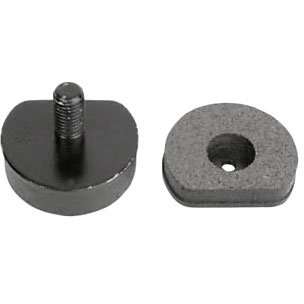


Kimpex Standard Metal Brake Pads for Yamaha SnoSport 125 Snowmobile


Kimpex Standard Metal Brake Pads for Yamaha SnoSport 125 Snowmobile
$23.39
Sale price
$23.39
Regular price
$23.39
SKU:PT3000193
My Garage
Select a ride to guarantee fitment.
My Garage
Add your vehicles to your garage. Several features will then be available to facilitate your searches.
- Store vehicles in your garage
- Easily find guaranteed fit products and accessories
- Get product recommendations
Available Online
Free shipping on orders over $99
Standard Fulfillment: -
Expedited Fulfillment: -

Lowest Price Guaranteed

Fast Shipping

Easy Returns
Description
Pad Purpose:
- The purpose of any brake pad is to push or squeeze against the brake drum or disc to slow it down. Softer brake pads "bite" into the rotor and stop better but tend to wear out faster.
Stopping Power:
- The stopping power of ceramic and metallic pads varies by temperature. Ceramic pads tend to stop better when very hot and metallic operate better in the cooler range.
Fade Resistance:
- A ceramic pad's strongest point is its ability to resist "brake fade", or the tendency to lose performance during repeated use and subsequent heating.
Wear:
- Though both pads tend to wear at similar rates, the ceramic's softer material surface helps prevent damage to metal rotors.
Noise and Dust:
- Ceramic pads vibrate at a higher frequency than the human ear can detect, and thus appear quieter in operation than metallic. Also, ceramic pads don't cause the black "brake dust" deposits like metallic pads.
Technical Specifications
- MFG. Part Number 05-152-35FM
Vehicle Information
Yamaha SnoSport 125 Snowmobile (1990-1991)
The Yamaha SnoSport 125 was a compact snowmobile produced for a limited run, primarily in the 1990 and 1991 model years. It was designed as a high-end version of the SV80 SnoScoot, offering a more powerful engine and enhanced suspension for a sportier ride. Both the 1990 and 1991 models featured an air-cooled, 2-stroke, single-cylinder engine with a displacement of 123cc, delivering 8.1 kW (11.0 PS) at 6,500 rpm. This engine provided significantly more torque than the 80cc SnoScoot. During its production, the SnoSport 125 was offered as a single model, without multiple distinct trims in the conventional sense. The 1990 model was identified as the SV125EP SnoSport, while the 1991 model designations included SV125E, SV125R, or SV125ER (for electric start). There were no significant mid-cycle generation or engine changes between the 1990 and 1991 models; the core engine specifications remained consistent. The primary distinction was in the model designation and the availability of an electric start option in 1991. Its independent front suspension with coil-spring units and swingarm-type rear suspension with a single coilover shock were consistent across its production. Q: How do I know if this product fits my Yamaha SnoSport 125?
A: Please use the year and model selector at the top of the page to confirm compatibility for your specific 1990-1991 Yamaha SnoSport 125.
Maintenance
| Component | Interval | Details |
| Oil and Oil Filter | Every 100 hours or annually | Some mechanics suggest an oil change every 6 months, even if the hour limit isn't reached, while keeping the filter change annual. |
| Drive Belt | Check every 1,600 km or 6 months, replace as needed | Lifespan varies with conditions. Replace if significantly thinner, frayed, or cracked. Typical lifespan can range from 3,000 to 6,000 km. |
| Spark Plug | Annually or every 100 hours | |
| Air Filter | Inspect every 25 to 50 riding hours | Clean or replace more frequently in dusty, muddy, or wet conditions. Oiled cotton filters are typically cleaned and re-oiled every 19,000 km. Dry filters may be replaced every 24,000 to 48,000 km. |
| Coolant | Annually or every 1 to 2 years | Corrosion inhibitors deplete over time. Some sources suggest every 3 to 5 years for snowmobiles. |
The maintenance intervals below are based on general guidelines. It is highly recommended to consult the official owner's manual for your Yamaha SnoSport 125 for precise information.