


SuperATV Safari Fender Flares
PT17000338 (MFG #: SFF-P-RZR)
$291.95
Sale price
$291.95
Regular price
$306.99
Sale
-4%
Skip to product information

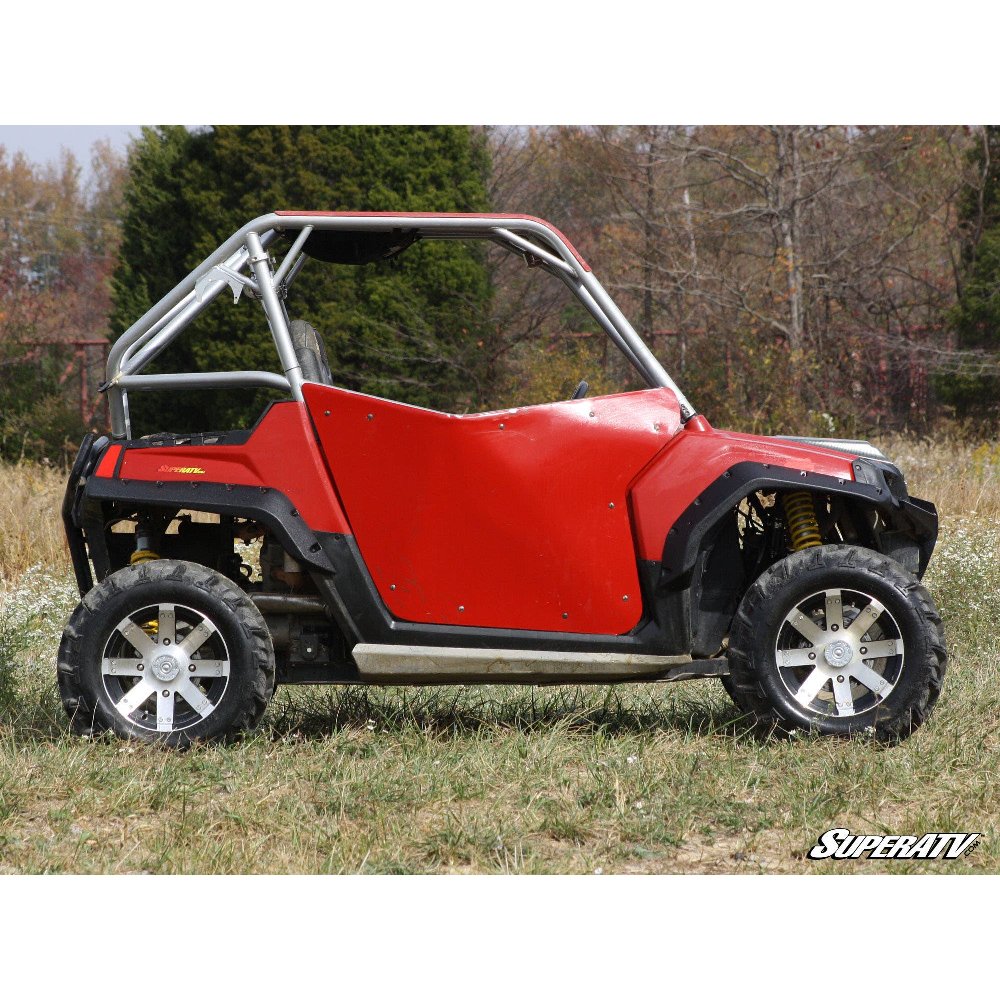


SuperATV Safari Fender Flares for Polaris RZR S 800 Side-by-Side

SuperATV Safari Fender Flares for Polaris RZR S 800 Side-by-Side
$291.95
Sale price
$291.95
Regular price
$306.99
Sale
-4%
SKU:PT17000338
My Garage
Select a ride to guarantee fitment.
My Garage
Add your vehicles to your garage. Several features will then be available to facilitate your searches.
- Store vehicles in your garage
- Easily find guaranteed fit products and accessories
- Get product recommendations
Available Online
Free shipping on orders over $99
Standard Fulfillment: -
Expedited Fulfillment: -

Lowest Price Guaranteed

Fast Shipping

Easy Returns
Description
No More Trail Debris
You’re a RZR rider, so we know you don’t let anything come between you and the terrain. You especially wouldn’t let a little trail debris slow you down, which is why you need SuperATV’s Safari Fender Flares for the Polaris RZR 800. They deflect rocks and mud, keeping that stuff on the ground (where it belongs) instead of in your cab. And did we mention they look really cool, too? The black studded design gives your machine an even more rugged appearance.
Durable and Heavy Duty
These fender flares are made of durable, heavy-duty automotive plastic—in other words, they’re built to put up with years of trail abuse. They offer three extra inches of protection at both the front and rear of your vehicle. This means you can ride longer and harder without worrying about debris being thrown up into your cab.
Quick, Easy Installation
Our fender flares come with all required hardware and access to full-color instructions, so installation is a breeze. We will note that installing this product requires drilling into your machine, but the process is quick and easy. Less time in the garage means more time hitting the trails, so you’ll be putting these fender flares to the test in no time.
Features:
- Deflects rocks, mud, and other debris
- Made of heavy-duty automotive plastic
- Front width: 3”
- Rear width: 3”
- Comes with all required hardware and access to full-color instructions
- Quick and easy installation
Technical Specifications
- MFG. Part Number SFF-P-RZR
Vehicle Information
Polaris RZR S 800 Side-by-Side (2009-2014)
The Polaris RZR S 800, produced from 2009 to 2014, is a side-by-side vehicle renowned for its performance and handling. It featured a 760cc electronic fuel-injected twin-cylinder engine, generally producing 55 horsepower, though some sources indicate 53 HP for the 2011 model. The RZR S 800 distinguished itself from the standard RZR 800 with its wider 60.5-inch stance, long-travel suspension with Fox Podium shocks offering 12.5 inches of ground clearance and 12 inches of wheel travel, and an upgraded H.O. (High Output) engine. Over the years, the RZR S 800 saw notable enhancements. In 2011, Polaris dropped the "Ranger" designation, making RZR a standalone series, and introduced a Bosch EFI system for improved efficiency and throttle response. Sachs 2.0 shocks were also added. By 2014, Electronic Power Steering (EPS) became an available option on some trims, offering enhanced driving comfort. FAQ:
Q: How can I ensure parts are compatible with my Polaris RZR S 800?
R: To guarantee compatibility, please use the year and model selector at the top of this page.
Maintenance
| Component | Interval | Details |
| Initial Break-In Service | 25 hours, 1 month, or 400-800 km (whichever comes first) | Change engine oil and filter. Inspect air filter and replace as necessary. Check coolant level and for leaks. Grease all applicable fittings. |
| Engine Oil and Filter | 800 km, 50 hours, or 6 months (whichever comes first) | Change oil and filter. Always change the filter with every oil change. |
| Air Filter | Before every ride and as per manual | Inspect before every ride and clean or replace as needed. Always change the air filter at the intervals outlined in the Periodic Maintenance Chart in your Owner's Manual. |
| Spark Plugs | 1 600 km, 100 hours, or 12 months (whichever comes first) | Inspect and replace as needed. Some sources suggest replacement every 8 000 km or 500 hours, with inspection every 100 hours. |
| Drive Belt | 800 km, 50 hours, or 6 months (whichever comes first) | Inspect and replace as needed. |
| Coolant | Daily, annually, and every 5 years | Check fluid level daily or before every ride. Inspect coolant strength seasonally and pressure test the system yearly. Completely drain and replace the coolant every five years. Some sources suggest replacement every 8 000 km or 500 hours. |